
The World as a Classroom: Educating Children Through Travel
In this piece, Ellie Connolly, BAHS UK Senior Placement Specialist, shares her advice on “worldschooling”: educating children through travel and the experiences it offers. The approach embraces flexibility, hands-on learning, and new perspectives on education.
With a background in education, Ellie brings over 10 years of experience as a nanny, governess and private educator, working with families across the UK, Europe and North America.

I began my career as a nanny before training as a teacher and spending several years in the classroom. When I later returned to private households as a governess and private educator, I was able to bring those two sides of my experience together. Suddenly, the world became my classroom.
Travelling extensively with families taught me that successful education on the road requires a slightly different skill set: you need to understand what a child should be learning academically, but also recognise when the opportunity in front of you is more valuable than the lesson you had planned.
Often referred to as “worldschooling”, educating while travelling can take many forms. Some families follow a formal homeschool curriculum; others remain connected to their child’s school, while others build a more personalised programme around the child and the places they visit. Whichever approach a family takes, there is a balance to strike between academic progress and making the most of everything travel has to offer.
In one role, I joined an established team of experienced nannies, bringing my background as a qualified teacher to the children’s education. We initially followed a prescribed homeschool programme, but increasingly adapted it to be more hands-on and project-based. Don’t get me wrong, workbooks have their place. But when you’re travelling through Europe, Asia and North America, it seems a shame for all the learning to happen on the page.
Let the destination help do the teaching
A typical school day was rare. We usually did the more formal work first, which gave the children some structure (and the promise of what we’d do afterwards was often pretty good motivation!).
But learning didn’t stop once we put the books away. We used menus to practise maths, supermarket trips to practise handling money, and airport departure boards to calculate journey times, work out when people would land, or even what time we might finally get home. We kept travel diaries filled with photographs and ticket stubs, and used the places we visited as inspiration for writing.
Sometimes we built a whole project around where we were. Before seeing sea turtles hatch on a beach in Grenada, for example, we researched why they are endangered and what is being done to protect them. Somehow, that took us down a rabbit hole into the tortoiseshell jewellery trade and the reason why turtle shell was once so valuable. The children made posters and presentations about what they had discovered and even pretended to be news reporters covering the story from the beach.
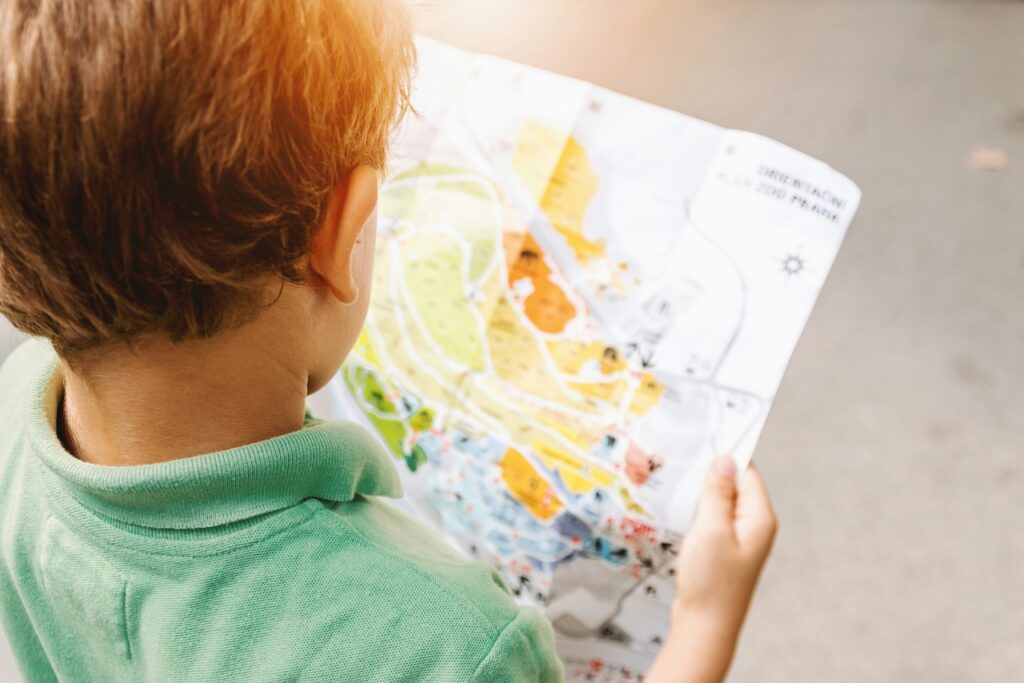
Other opportunities happened naturally. We’d notice unfamiliar trees and plants and talk about how they had adapted to hot, humid climates, or come across a fruit we’d never seen before and find out where and how it grew. A sudden tropical downpour could lead us into the water cycle, while maps helped us make sense of where we were, where we were going next, and how far we had travelled. For me, that was one of the best things about teaching while travelling. You don’t need to turn every outing into a lesson or constantly quiz children on what they’re seeing. Sometimes it’s simply about being curious, following their interests and making the most of what’s around you.
Structure still matters
All that flexibility didn’t mean abandoning structure. We still needed to know what the children should be learning and to make sure we covered it. We could be flexible about how and where we taught, but we still had a curriculum to cover. When it was time for more formal lessons, we kept a familiar routine. The pencil cases came out, and we sat down to write the date. It was a small thing, but it helped signal that this was school time, even if that day’s classroom happened to be a hotel room.
Of course, it wasn’t always a hotel room. I’ve taught in airports, airport lounges and the back of taxis. Sometimes lessons had to be short, portable and fitted around the realities of travelling.
I also learned when not to teach. Jet lag, delayed flights and last-minute changes were all part of it. If a child was exhausted, there was little point in forcing them through a task just because that was what we had planned. Sometimes you had to accept that it wasn’t the right time and try again later.
One thing I became particularly conscious of was socialisation. When children travel for long periods, they don’t automatically get the everyday time with other children that they would at school. I actively looked for group activities, local playgrounds and opportunities to meet other travelling families. But I also made sure not to organise every minute for them. Sometimes they just needed the freedom to play and make friends.
 Finding the right person
Not every travelling family needs a private teacher. An experienced nanny can bring plenty of educational value through activities, reading, conversation and exploration, without being responsible for a formal curriculum. A governess usually has a stronger educational focus alongside the child’s wider care and development, while a private educator may be more appropriate when someone needs to take responsibility for curriculum, assessment and academic progress.
In reality, these roles often overlap. What matters is understanding what the family actually needs.
For travelling roles in particular, qualifications are only part of the picture. You’re often living and travelling closely together, so personality and compatibility matter too. The right person needs to be organised but flexible, able to take initiative and comfortable when plans inevitably change.
Above all, they need good judgement: knowing when a child needs a structured lesson, when an unexpected experience is the lesson, when they need other children to play with and when everyone simply needs an afternoon off.
When we recruit for education-focused roles at BAHS, we spend a lot of time understanding what a family actually needs. That includes what they want educationally, but also their lifestyle, routines and the role they want that person to play in their child’s development.
For travelling families, that becomes even more important. With the right person, children can keep progressing academically while making the most of everything the world around them has to teach.
The world really can become the classroom.
Related Blog Posts
Free Play: Why Stepping Back Supports Childhood Development
Benefits of Learning a Second Language at a Young Age