

Free Play: Why Stepping Back Supports Childhood Development
Meet Hilary Adler, Nature Educator and Rota Nanny
We had the privilege of sitting down with Hilary Adler, a career nanny with over 15 years of experience and a 2026 INA Nanny of the Year Finalist. Hilary discusses the importance of free play for young children, and the benefits of spending unstructured time in nature.
About Hilary:
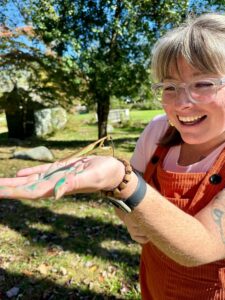
Hilary Adler is a professional career nanny and nature educator with over 15 years of experience in the private childcare industry. She works with children of all ages, with training that spans from postpartum doula care through adolescence. Hilary is best known for her advocacy and enthusiasm for nature-based play and free play.
Hilary works as a rota nanny, and for the past six years, during her “off” rotations, she has led a free, nature-based playgroup for children in her community called Virgo and Vine. Through this work, she teaches children (and their caregivers) about the natural world, the importance of free play, and the value of nature-based play.
What is “Free Play”?
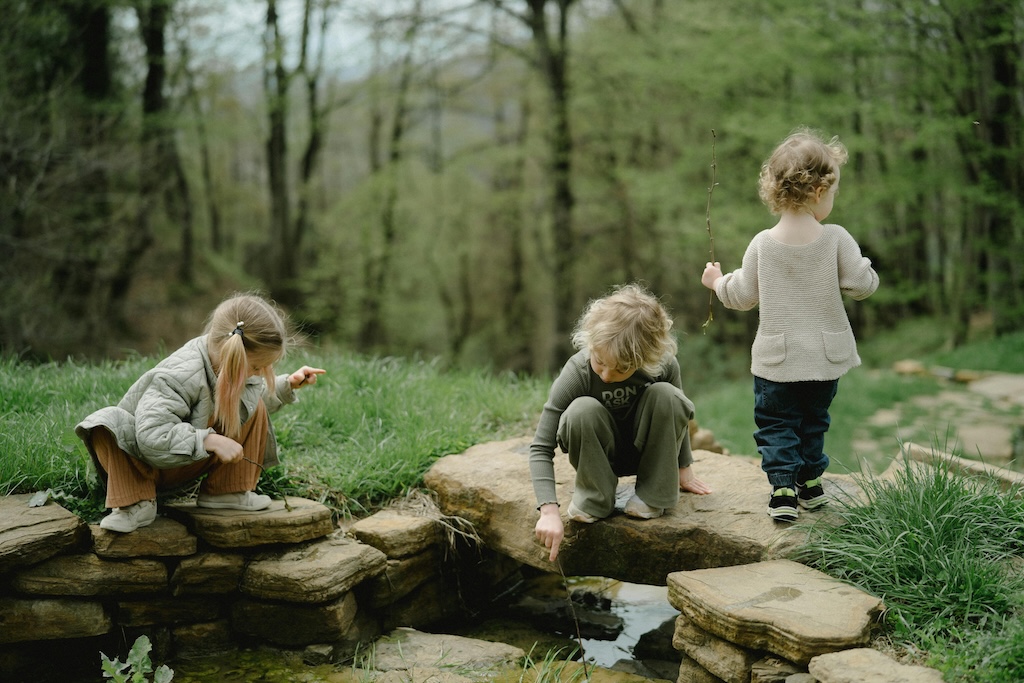
Free play, or unstructured play, occurs when children engage in activities on their own, without direction from adults or older peers. Unlike structured play, which has set rules and goals, free play is open-ended and guided by the child’s interests. Children choose what to do, how to do it, and for how long.
Why is Free Play beneficial for children?
Play is arguably one of the most effective and scientifically supported ways for children to grow, learn, and thrive. More than just fun, free play supports overall development. It helps children grow physically, think creatively, build social skills, and express emotions.
In a world that increasingly favors structured activities, the importance of free play is sometimes overlooked. However, it remains a key part of healthy childhood development.
When children are given the freedom to decide what to do, their creativity expands. Completing self-directed activities also builds confidence. These seemingly simple moments are rich with learning opportunities. Unstructured free play fosters “trial-and-error” problem-solving skills. When a child tries something, fails, and then succeeds in a new way, they learn to trust their own decision-making.
Free play also strengthens social skills. When children play independently together, they make choices, judgments, and take actions based on their own thoughts and feelings. They discover what they like and dislike in both play and interaction. This process helps them form their own opinions, sense of self, and interests independent from their parents. That sense of self is essential for building confidence.
Take a Step Back
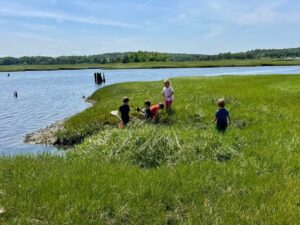
Stepping back does not mean leaving children unsupervised. You are still present and available if intervention is needed. However, try to limit intervening unless there is unsafe behavior.
This can feel challenging, especially in a society that encourages adults to solve children’s problems for them. But often, the “problems” children encounter during play can be resolved more effectively on their own.
Allowing children to navigate new and sometimes difficult situations helps develop their social-emotional skills. They must communicate their thoughts and feelings with their peers, especially during conflict. When adults immediately step in to resolve disagreements, children miss opportunities to learn. When they work through conflicts independently, they build essential conflict-resolution skills.
Try It Out
As adults, we sometimes unintentionally interrupt our children’s learning opportunities. Consider planning fewer structured activities and allowing more time for free play. Be intentional, and observe whether you notice changes in your child’s development, behavior, and skills.
If free play is new to your family, it may take some adjustment. You’ll likely hear, “I’m bored” and that’s okay. In fact, boredom can be a gateway to imagination and creativity.
Like any skill, the more it’s practiced, the stronger it becomes. You can encourage free play by offering loose parts, creating space, and spending time outdoors.
Related Blog Posts
Keep Children Learning All Summer
Educational & Creative Summer Programs