Eldercare can be as simple as a companion stopping in three times per week to stock the fridge, drive your loved one to appointments, and play board games, or as complex as 24-hour care, including management of oxygen concentrators, medications, and serious illness. If searching for a caregiver for your loved one, we’d suggest starting by making a list of the areas where support is needed, including physical, emotional, cognitive, and social needs.
Below, we outline the different types of in-home elderly care to help you better understand which level of support may be most appropriate for your family’s needs.
Companion care
Companion care varies greatly from person to person, depending on their specific needs and goals, and can have a myriad of benefits.
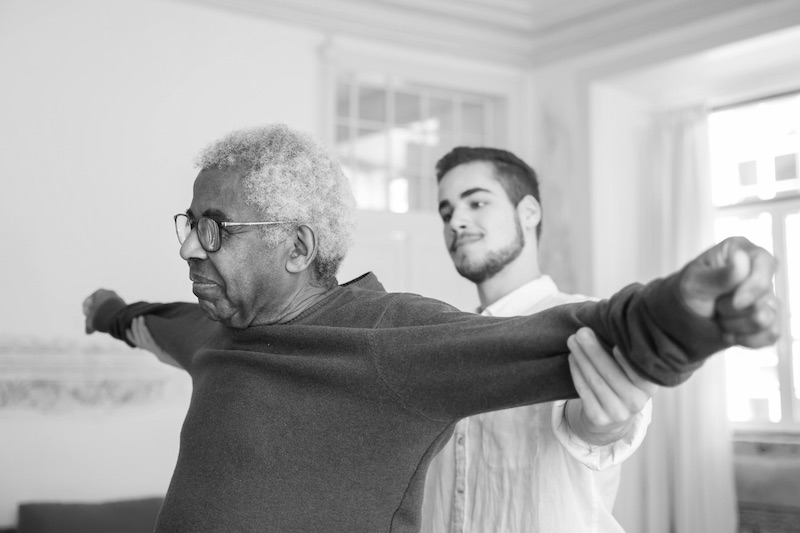
A companion often provides support with day-to-day tasks, such as checking the mail, running errands, assisting with exercise routines, light housekeeping and laundry, accompanying their elderly client to doctor appointments, and relaying important information to the family. Taking these small tasks off the elderly person’s to-do list can greatly ease anxiety and stress, while making sure the household runs smoothly.
Loneliness can be a serious concern for the elderly and a companion can ease this by offering emotional support and company – helping seniors with their hobbies, accompanying them to museums, social gatherings and to meet their friends, as well as being good listeners and there for a chat.
Personal Care Aides (PCA)
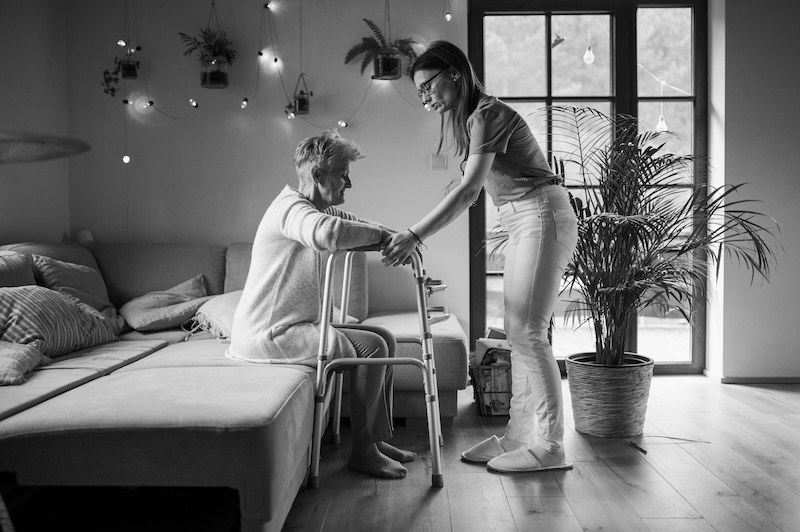
Personal Care Aides (PCAs) provide more hands-on support than companion caregivers, assisting older adults with personal hygiene and everyday self-care. This may include bathing, toileting, dressing and undressing, grooming, transfers between a bed, chair, or wheelchair, and assistance with walking or mobility aids. Their support can help older adults manage daily routines safely and comfortably while maintaining as much independence as possible.
Please note that in-home companion care and Personal Care Aides (PCA) is separate from medical care. While caregivers can help clients take their medications, accompany them to their doctor appointments, relay important information to the family, support them in doing memory exercises and staying active, they are not medical professionals and cannot treat or diagnose medical conditions.

Medical eldercare
Those with health needs that require some level of in-home care typically require medical eldercare rather than a companion. In the US, the three main types are Home Health Aides (HHA), Certified Nursing Assistants (CNA), and Registered Nurses (RN). Within these, you might find caregivers with specialties, including Alzheimer’s specialists, hospice care nurses, and more. For these caregivers, safety and health are the top priorities, but, like companions, they also offer social benefits to the patient, as well.
🇺🇸In the US, In order of increasing level of need, the categories are companion (non-medical and Personal Care Aides), Home Health Aide (HHA), Certified Nursing Assistant (CNA), and Registered Nurse (RN).
🇬🇧In the UK, the categories, in order of increasing level of need, are companion, Home or Domiciliary Care Worker, Health Care Assistant (HCA), and Registered Nurse (RN).
Home Health Aide 🇺🇸/Home or Domiciliary Care Worker 🇬🇧
An Home Health Aide (HHA) is the next step after companion care; HHAs are a good choice for those who require medical care but are not seriously ill. This might be an elderly patient with a broken leg who cannot move around safely or one in early-stage dementia, who needs guidance and support. An HHA is similar to a companion in that they will offer social interaction and can typically help with tasks around the house, such as grocery shopping and laundry. Many will cook simple healthy meals and accommodate specialized diets, such as low sodium. They will track medication usage but cannot administer medications directly. They can monitor vital signs and tend to minor wounds, as well as assist with prosthetic limbs. They will have the skills to safely help with bathing, feeding, and repositioning in bed.
🇺🇸In the US, Home Health Aides are certified by the state; state regulations vary but typically HHAs need a high school diploma or a GED and then complete around 75 hours of training and finally take an exam to receive their certification.
🇬🇧In the UK, there is no mandatory training to be a Home or Domiciliary Care Worker, but reputable employers require carers to complete the Care Certificate which covers topics such as moving and handling and medication awareness.
Certified Nursing Assistants 🇺🇸/Health Care Assistant 🇬🇧
If the elderly client requires more hands-on medical assistance, a Certified Nursing Assistant (CNA) might be a good choice. In addition to everything a Home Health Aide (HHA) can do, CNAs can also set up medication drips, manage oxygen concentrators, and care for existing catheters. They will monitor vital signs and medical machinery. CNAs will also help around the home – they will usually handle meal preparation, light housekeeping, laundry for the patient, and manage appointments.
🇺🇸In the US, Certified Nursing Assistants (CNAs) require more intense training than HHAs, and they are licensed, rather than certified. Although the regulations in the United States vary by state, CNA preparation typically requires about 120 hours of training, including supervised clinical training followed by oral, written, and skill-based exams.
🇬🇧In the UK, Health Care Assistants (HCA) are required to pass their Care Certificate and National Vocational Qualification (NVQ) Level 2 or 3 in Health and Social Care.
Registered Nurses (🇺🇸 and 🇬🇧)
Registered Nurses (RNs) are the right choice for those who need more intense at-home medical care. This is right for patients with feeding tubes, late-stage cancer, medications delivered through port-a-caths, and more. These caregivers can handle issues including care for dementia, advanced cancer, heart issues, kidney issues, mobility etc. RNs can administer medication, place catheters, handle complex wound care, and start and manage intravenous (IV) lines. Note that most RNs will help only minimally around the house as the primary focus of an RN is the health and safety of the patient; they will typically help keep the immediate area clean and tidy, but will not cook or do laundry.
🇺🇸Registered Nurses in the United States must have a college degree, such as an associate’s degree or a bachelor’s degree in nursing (BSN). They must also pass the National Council Licensure Examination (NCLEX) and apply for a license in their state. They require the most extensive training and education of all in-home eldercare and thus command the highest salaries.
🇬🇧In the UK, Registered Nurses need to complete a 3 year BSc degree in Nursing.
How BAHS can help
When our placement specialists review candidates, they screen specifically for qualifications, additional training, and certifications, ensuring that any relevant expertise is identified and matched to your loved one’s needs.
What additional care options should families consider?
Specialized caregivers
Some caregivers bring an additional layer of specialized training and experience tailored to specific conditions or stages of life. This may include expertise in dementia and Alzheimer’s care, Parkinson’s support, mobility assistance, diabetes management, or chronic illness management.
Temporary or transitional care
Temporary or transitional care offers flexible, short-term support during periods of change, recovery, or increased need. Transitional care is especially valuable following surgery, hospitalization, or when a primary caregiver is unavailable, as additional support during recovery can help reduce the risk of complications or hospital readmission.
Families often turn to transitional care when a loved one is returning home after time in a hospital or care setting. Caregivers help ease this transition by supporting daily routines, ensuring care plans are followed, and providing guidance to family members or other caregivers. Support can range from household tasks, such as shopping, laundry, and meal preparation, to personal care and, when appropriate, nursing-related assistance. This type of care can also serve as a natural introduction to in-home support, often evolving into a longer-term arrangement over time.
Respite care
If you are caring for a loved one yourself, or if a regular caregiver needs temporary cover, respite care can provide the relief and flexibility you need. This can take many different forms – it might be a part-time companion three times per week to give you peace of mind while taking time to yourself, or it might be a full-time nurse for five weeks to allow you to take a trip you’ve been putting off.
Palliative care
Palliative care is specialized medical support focused on improving quality of life for individuals living with serious or chronic illnesses. Unlike hospice care, palliative care can run alongside curative treatment, and is not limited to those nearing the end of life. It can be introduced at any stage of an illness, often working in tandem with a patient’s existing medical team.
Hospice care
According to the NHS UK, “the aim of hospice care is to improve the lives of people who have an incurable illness. Hospices provide care for people from the point at which their illness is diagnosed as terminal to the end of their life, however long that may be.” The Hospice Foundation similarly describes hospice care as “medical care focused on comfort.”
Hospice care focuses on quality of life and dignity rather than curative treatment. Care may be provided at home, in a nursing home, or within another community living setting, allowing individuals to remain close to family members, pets, and personal belongings. Support often includes pain and symptom management, emotional and spiritual care, and guidance for both the individual and their family, including grief support.
It is important to understand that hospice care typically acts as a supplement to care rather than a replacement for full-time caregiving support.
End-of-life doulas
Sometimes called a death doula or end-of-life midwife, an end-of-life doula guides individuals and their loved ones through the dying process, ensuring the person’s wishes are heard, understood, and respected. They help navigate difficult conversations, advise on the options available, and provide non-medical support — emotional, spiritual, psychosocial, and practical — to empower dignity throughout. Learn more at INELDA.
End-of-life doulas can be engaged independently or alongside hospice or palliative care, offering a compassionate layer of support that complements the clinical team.
For a deeper perspective, we encourage you to read on our blog the reflections of Martha Roth, an end-of-life midwife, on death, dying, and how we can support those we love through this sacred life transition.

Each of these care types can be tailored and combined depending on the individual’s needs, ensuring a highly personalized approach that evolves over time.
Once you’ve identified the right type of care, the next step is deciding how that care should be structured. For a full breakdown of scheduling options, from live-in care to rotating shifts, visit this section.
British American Household Staffing works with highly vetted candidates to offer not only the most experienced candidates, but also candidates who are passionate about their job, are kind and compassionate, and will support you and your loved one through every stage of the journey. Get in touch.